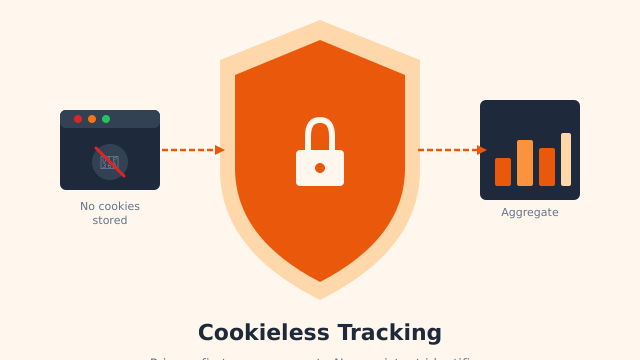
You can learn what works on your website without tracking who each visitor is. The trick is to count things in groups. You count how many people came, what they clicked, and how many bought. You just don’t tie any of it to a name. That’s what privacy-friendly analytics means.
Counting people, not following them
Think about a shop. The owner wants to know if the shop is doing well. They don’t need to know your name to figure that out. They can just count.
How many people walked in today? Which shelf did the most people stop at? How many people bought something? All of that is useful. And none of it needs to know who you are.
A website works the same way. You can count visits and actions as a group. You don’t have to follow one person around to see what works.
This is also kinder to your visitors. Many people don’t want to be watched online. When you only count groups, there’s no list of names to lose or leak. You get your answers, and they keep their privacy.
What you can still see
People worry that this kind of counting tells you nothing. It’s not true. You can still see a lot.
You can see which pages get the most visits. You can see where people came from, like a search engine or a link. You can see how many people did the thing you want, like sign up or buy. You just see it all as totals, not as named people.
A quick example
Say 1,000 people visited your shop page last week. Of those, 30 bought something. That’s 3 buyers out of every 100 visits.
That one number tells you a lot. If you change the page and the rate goes up to 5 out of 100, the change helped. If it drops, it hurt. You learned this without knowing a single name.
Groups of numbers can answer most of your questions. Who each person is rarely matters for the choice you have to make.
What this is good for
This way of counting is great for most websites. Blogs, shops, and simple sign-up pages all fit it well. You see what works, you fix what doesn’t, and you respect people’s privacy at the same time.
So pick one number that matters to you. It could be visits to your best page, or how many people sign up. Watch it for a week. Then try one small change and watch the same number again. That simple loop is most of what good analytics is.
 Nathan Hollis
·
2 min read
Nathan Hollis
·
2 min read